There are many foods and doubts as well.
Know what really helps or does not
in their treatment.
WHAT ARE THE FOODS NEEDED FOR TREATMENT?
You should ingest several different foods,
because each food group has
composition.
Know the main characteristics of the groups
and recommendations.
There are many foods and doubts as well.
Know what really helps or does not
in their treatment.
WHAT ARE THE FOODS NEEDED FOR TREATMENT?
You should ingest several different foods,
because each food group has
composition.
Know the main characteristics of the groups
and recommendations.
There are many foods and doubts as well. Know what really helps or does not in their treatment.
WHAT ARE THE FOODS NEEDED FOR TREATMENT?
All food groups are required.
You should ingest several different foods, because each food group has
composition.
Know the main characteristics
of the groups
and recommendations.
Breads, pastas, rice, potatoes,
manioc, wheat and corn meal:
They are sources of carbohydrates, which
energy required for the operation of the
our body.
DAILY PORTIONS
RECOMMENDED
6 to 11 servings
– 1 BREAD SLICE
– HALF FRENCH BREAD
– 4 SMALL BISCUITS
– HALF SHELL RICE
– MIDDLE OF MACARROW
– HALF CEREAL CUP
Meat, fish, poultry, eggs,
beans, soybeans and lentils:
They are sources of proteins that contribute to
regeneration and maintenance of the human body.
DAILY PORTIONS
RECOMMENDED
2 to 3 servings
– 1 medium steak
– 1 fish fillet
– 1 cup of beans
Breads, pastas, rice, potatoes,
manioc, wheat and corn meal:
They are sources of carbohydrates, which energy required for the operation of the our body.
DAILY PORTIONS RECOMMENDED
6 to 11 servings
– 1 BREAD SLICE
– HALF FRENCH BREAD
– 4 SMALL BISCUITS
– HALF SHELL RICE
– MIDDLE OF MACARROW
– HALF CEREAL CUP
Meat, fish, poultry, eggs,
beans, soybeans and lentils:
They are sources of proteins that contribute to
regeneration and maintenance of the human body.
DAILY PORTIONS RECOMMENDED
2 to 3 servings
– 2 eggs
– 1 medium steak
– 1 fish fillet
– 1 cup of beans
Fruits and vegetables:
They are sources of vitamins and minerals, which
help increase the body's resistance against
infections.
DAILY PORTIONS
RECOMMENDED
5 servings
– half cup. fruit salad
– 1 slice of melon
– ¾ cup fruit juice
– 1 cup of raw vegetables
– half cup cooked vegetable
Milk and dairy products:
Milk and dairy products are important sources of
proteins, many vitamins and calcium.
DAILY PORTIONS
RECOMMENDED
2 to 3 servings
– 240g of yogurt
– 60g of cheese
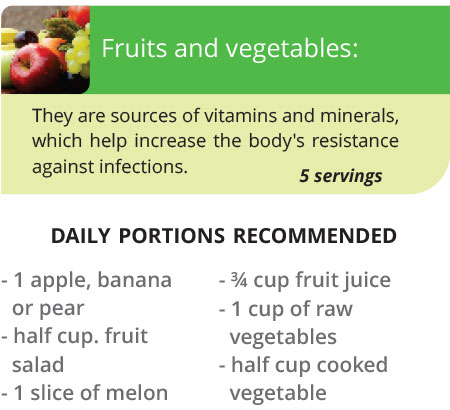
Fruits and vegetables:
They are sources of vitamins and minerals, which
help increase the body's resistance against
infections.
DAILY PORTIONS RECOMMENDED
5 servings
– 1 apple, banana or pear
– half cup. fruit salad
– 1 slice of melon
– ¾ cup fruit juice
– 1 cup of raw vegetables
– half cup cooked vegetable
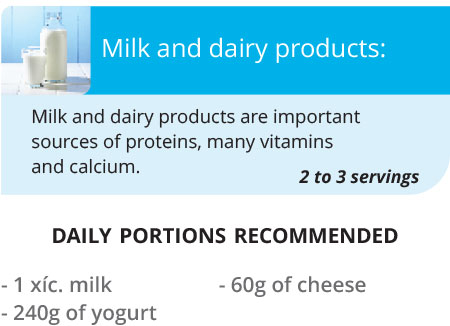
Milk and dairy products:
Milk and dairy products are important sources of
proteins, many vitamins and calcium.
DAILY PORTIONS RECOMMENDED
2 to 3 servings
– 1 xíc. milk
– 240g of yogurt
– 60g of cheese
Do not delete a meal
• Morning snack
• Lunch
• Afternoon snack
• Dinner
• Supper
Do not delete a meal
• Morning snack
• Lunch
• Afternoon snack
• Dinner
• Supper
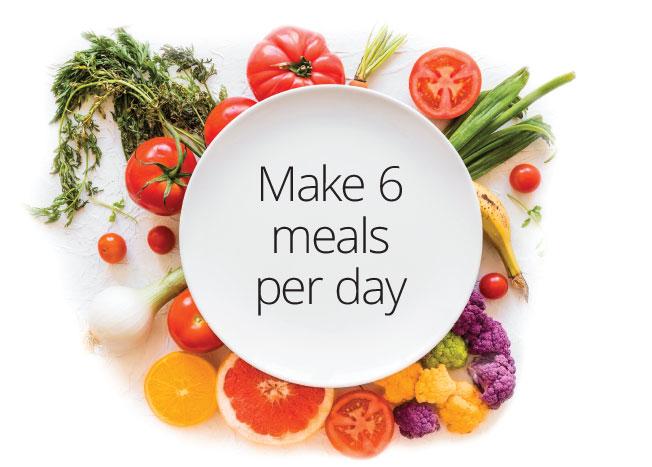
Do not delete a meal
• Breakfast
• Morning snack
• Lunch
• Afternoon snack
• Dinner
• Supper
Avoid eating
chocolates, candy, ice cream
and sweets
Avoid ingesting
wines and beverages
alcoholic
Avoid eating
chocolates, candy, ice cream
and sweets
Avoid ingesting
wines and beverages
alcoholic
Avoid eating
Avoid ingesting
At this stage, adequate nutrition can contribute to
well-being and recovery of the conditions
of people.
What to eat
on the day of
chemotherapy?
Care with food and nutrient important part during chemotherapy.
At this stage, adequate nutrition can contribute to
well-being and recovery of the conditions
What to eat
on the day of
chemotherapy?
What to eat
on the day of
chemotherapy?
If you are nauseous, seek to ingest:
Fruits
Juices
Yogurt
Toast
Snacks
Natural
Soups
If you are nauseous, seek to ingest:
Fruits
Juices
Yogurt
Toast
Snacks
Natural
Soups
Fruits
Juices
Yogurt
Toast
Snacks
Natural
Soups
And during chemotherapy?
If you live far away, try to feed yourself because
It can be time consuming and you are not
long time without eating. Bring a fruit,
biscuit, cereal bar and water.
And during chemotherapy?
When you come to do chemotherapy,
If you live far away, try to feed yourself because
It can be time consuming and you are not
long time without eating. Bring a fruit,
biscuit, cereal bar and water.
And during chemotherapy?
When you come to do chemotherapy, If you live far away, try to feed yourself because It can be time consuming and you are not long time without eating. Bring a fruit, biscuit, cereal bar and water.
How does radiotherapy and
chemotherapy affect my diet?
of the body, sometimes the treatment also reaches the normal cells and your body.
This can produce undesirable effects, causing eating problems.
These effects vary from one person to another, from the body part that
is being treated, the type of treatment used, the dose required and the
duration of treatment.
What are the main problems
during radio treatment and
chemotherapy?
Pain in the mouth or throat
There is pain in the throat or esophagus when you swallow food.
Certain foods irritate the mouth even more and may make it even more
difficult to to chew and swallow food.
So try to eat soft foods and pasty like:
How does radiotherapy and chemotherapy affect my diet?
Although the goal of radio and chemotherapy is to destroy cancer cells of the body, sometimes the treatment also reaches the normal cells and your body.
This can produce undesirable effects, causing eating problems.
These effects vary from one person to another, from the body part that is being treated, the type of treatment used, the dose required and the duration of treatment.
What are the main problems during radio treatment and chemotherapy?
Pain in the mouth or throat
You may have sore mouths and gums. In some situations,
There is pain in the throat or esophagus when you swallow food.
Certain foods irritate the mouth even more and may make it even more difficult to to chew and swallow food.
So try to eat soft foods and pasty like:
How does
radiotherapy and
chemotherapy affect
my diet?
Although the goal of radio and chemotherapy is to destroy cancer cells of the body, sometimes the treatment also reaches the normal cells and your body.
This can produce undesirable effects, causing eating problems.
These effects vary from one person to another, from the body part that is being treated, the type of treatment used, the dose required and the duration of treatment.
What are the main problems during radio treatment and chemotherapy?
Pain in the mouth or throat
Try to ingest
Food group
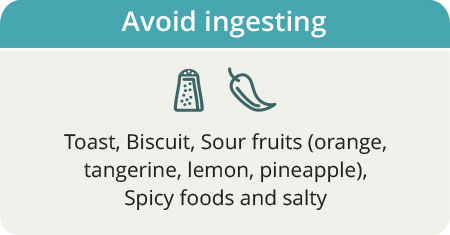
Avoid ingesting
Try to ingest
Food group
Avoid ingesting
cassava, yam), noodles,
porridge (oats or other cereal)
Biscuit
cassava, yam), noodles,
porridge (oats or other cereal)
Biscuit
Scraped fruit
tangerine, lemon, pineapple)
Scraped fruit
tangerine, lemon, pineapple)
(carrot, pumpkin, zucchini).
shredded beef.
shredded beef.
ice cream and yogurt.
and salty
and salty
Some guidelines
If you prefer, use straw to
drink liquids.
Mix the foods with butter,
sauces and broths to make
them more pastey
If you find it difficult to
swallow, try moving your
head back or forward, making
it easier for food to slide
down your throat
After each meal, rinse the
mouth with filtered water.
This will remove the remains
of food and bacteria that
accumulate in the mouth.
Some guidelines
Cook the food un l tender. If necessary, liquidise foods (including meats) to make them easier to swallow
Hot food can irritate your already sensitive mouth and throat. So, prefer the food at room temperature or cold
If you prefer, use straw to
drink liquids.
Mix the foods with butter,
sauces and broths to make
them more pastey
If you find it difficult to
swallow, try moving your
head back or forward, making
it easier for food to slide
down your throat
If you experience heartburn or burning, avoid lying down after meals. Sit or stand for about one hour after eating
After each meal, rinse the
mouth with filtered water.
This will remove the remains
of food and bacteria that
accumulate in the mouth.
Some guidelines
Changes
on the palate
The taste and smell of food may change during the period
of illness or treatment. Some people complain that food
has run out of flavor. Other people complain of bitter or
metallic taste after ingesting some food, such as meat
and beans. These complaints may be fleeting, but you can
do some simple things so it does not get in the way of
your food.
Changes on the palate
The taste and smell of food may change during the period of illness or treatment. Some people complain that food has run out of flavor. Other people complain of bitter or metallic taste after ingesting some food, such as meat and beans. These complaints may be fleeting, but you can do some simple things so it does not get in the way of your food.
Changes on
the palate
The taste and smell of food may change during the period of illness or treatment. Some people complain that food has run out of flavor. Other people complain of bitter or metallic taste after ingesting some food, such as meat and beans. These complaints may be fleeting, but you can do some simple things so it does not get in the way of your food.
Procedures
Rinse your mouth before meals
Choose and prepare foods that look like look good and smell nice
Give preference to chicken, turkey or fish, if you have difficulty in eating beef
If you can not eat any type of meat, be sure to eat at least 1 egg a day.
If you have high blood cholesterol, eat only the egg white (2 a day)
Consume milk or its derivatives (cheese and yogurt) every day.
Avoid very hot or very cold foods
Abuse of herbs such as onions, garlic, parsley, chives, coriander, oregano, basil, thyme, walnut nutmeg and fennel. If you do not have sores in the mouth, can season the food with lemon, fruit citrus fruits, vinegar and pickles
Lemon, mint and mint mints to help avoid the unpleasant taste that remains in the mouth after feeding
You feel bitter taste in water experience put a twig of mint or orange peel on the Water jar. You may feel that the water has a more pleasant and refreshing taste.
Procedures
Rinse your mouth before meals
Choose and prepare foods that look like look good and smell nice
Give preference to chicken, turkey or fish, if you have difficulty in eating beef
If you can not eat any type of meat, be sure to eat at least 1 egg a day.
If you have high blood cholesterol, eat only the egg white (2 a day)
Consume milk or its derivatives (cheese and yogurt) every day.
Avoid very hot or very cold foods
If you feel metallic taste in cutlery, try use fork and plastic spoons
Abuse of herbs such as onions, garlic, parsley, chives, coriander, oregano, basil, thyme, walnut nutmeg and fennel. If you do not have sores in the mouth, can season the food with lemon, fruit citrus fruits, vinegar and pickles
Lemon, mint and mint mints to help avoid the unpleasant taste that remains in the mouth after feeding
You feel bitter taste in water experience put a twig of mint or orange peel on the Water jar. You may feel that the water has a more pleasant and refreshing taste.
Procedures
Rinse your mouth before meals
Choose and prepare foods that look like look good and smell nice
Give preference to chicken, turkey or fish, if you have difficulty in eating beef
If you can not eat any type of meat, be sure to eat at least 1 egg a day.
If you have high blood cholesterol, eat only the egg white (2 a day)
Consume milk or its derivatives (cheese and yogurt) every day.
Avoid very hot or very cold foods
If you feel metallic taste in cutlery, try use fork and plastic spoons
Abuse of herbs such as onions, garlic, parsley, chives, coriander, oregano, basil, thyme, walnut nutmeg and fennel. If you do not have sores in the mouth, can season the food with lemon, fruit citrus fruits, vinegar and pickles
Lemon, mint and mint mints to help avoid the unpleasant taste that remains in the mouth after feeding
You feel bitter taste in water experience put a twig of mint or orange peel on the Water jar. You may feel that the water has a more pleasant and refreshing taste.
Nausea and vomiting
Nausea and sometimes vomiting may occur after chemotherapy
and radiotherapy. To improve these complaints:
As you get better, start by swallowing (milk, juices and teas) and cold foods (yogurt, popsicles fruit and gelatin);
Give preference to dry foods like cookies, toast and cake (no filling and toppings);
Your favorite fruit juice or coconut water may be placed in the ice sheet and placed in the freezer. In the meal intervals, suck the frozen cubes, to improve nausea;
Avoid fried, breaded, greasy, sweet, seasoned and smelling strongly;
Try to eat every 3 hours. Avoid getting the stomach, as this may stimulate the sensation of of nausea;
Do not force yourself to eat your favorite foods when you are dizzy. This unpleasant feeling can cause you to avoid these foods in other occasions;
Drink plenty of fluids throughout the day, except at meals;
You should ingest small amounts of liquid at small intervals of time;
Give preference to liquids that are frozen or at room temperature. Avoid hot liquids;
Avoid lying down after meals. Try to rest sitting for at least 1 hour after meals;
Food should be taken at room temperature environment or more; hot foods can increase nausea;
If nausea develops during the morning, try eat dry toast or crackers of salt and water before get up.
Avoid eating 1 hour before treatment if nausea during radiation therapy or chemotherapy.
Nausea and vomiting
Nausea and sometimes vomiting may occur after chemotherapy and radiotherapy. To improve these complaints:
Avoid eating the moment you are upset seasick. Nausea can get better if you drink tea. ginger (preferably cold or at environment);
As you get better, start by swallowing (milk, juices and teas) and cold foods (yogurt, popsicles fruit and gelatin);
Give preference to dry foods like cookies, toast and cake (no filling and toppings);
Your favorite fruit juice or coconut water may be placed in the ice sheet and placed in the freezer. In the meal intervals, suck the frozen cubes, to improve nausea;
Avoid fried, breaded, greasy, sweet, seasoned and smelling strongly;
Try to eat every 3 hours. Avoid getting the stomach, as this may stimulate the sensation of of nausea;
Do not force yourself to eat your favorite foods when you are dizzy. This unpleasant feeling can cause you to avoid these foods in other occasions;
Avoid eating in hot, have kitchen smells that might be disgusting;
Drink plenty of fluids throughout the day, except at meals;
You should ingest small amounts of liquid at small intervals of time;
Give preference to liquids that are frozen or at room temperature. Avoid hot liquids;
Avoid lying down after meals. Try to rest sitting for at least 1 hour after meals;
Food should be taken at room temperature environment or more; hot foods can increase nausea;
If nausea develops during the morning, try eat dry toast or crackers of salt and water before get up.
Avoid eating 1 hour before treatment if nausea during radiation therapy or chemotherapy.
Nausea and vomiting
Nausea and sometimes vomiting may occur after chemotherapy and radiotherapy. To improve these complaints:
Avoid eating the moment you are upset seasick. Nausea can get better if you drink tea. ginger (preferably cold or at environment);
As you get better, start by swallowing (milk, juices and teas) and cold foods (yogurt, popsicles fruit and gelatin);
Give preference to dry foods like cookies, toast and cake (no filling and toppings);
Your favorite fruit juice or coconut water may be placed in the ice sheet and placed in the freezer. In the meal intervals, suck the frozen cubes, to improve nausea;
Avoid fried, breaded, greasy, sweet, seasoned and smelling strongly;
Try to eat every 3 hours. Avoid getting the stomach, as this may stimulate the sensation of of nausea;
Do not force yourself to eat your favorite foods when you are dizzy. This unpleasant feeling can cause you to avoid these foods in other occasions;
Avoid eating in hot, have kitchen smells that might be disgusting;
Drink plenty of fluids throughout the day, except at meals;
You should ingest small amounts of liquid at small intervals of time;
Give preference to liquids that are frozen or at room temperature. Avoid hot liquids;
Avoid lying down after meals. Try to rest sitting for at least 1 hour after meals;
Food should be taken at room temperature environment or more; hot foods can increase nausea;
If nausea develops during the morning, try eat dry toast or crackers of salt and water before get up.
Avoid eating 1 hour before treatment if nausea during radiation therapy or chemotherapy.
Diarrhea
Diarrhea may occur in people who have chemotherapy or radiation therapy
of the abdomen. Diarrhea may be due to several factors and the doctor should be
informed whenever you present more than 3 bowel movements a day, with soft stools.
Some guidelines can be followed to alleviate diarrhea.
Diarrhea
Diarrhea may occur in people who have chemotherapy or radiation therapy of the abdomen. Diarrhea may be due to several factors and the doctor should be informed whenever you present more than 3 bowel movements a day, with soft stools. Some guidelines can be followed to alleviate diarrhea.
Diarrhea
Diarrhea may occur in people who have chemotherapy or radiation therapy of the abdomen. Diarrhea may be due to several factors and the doctor should be informed whenever you present more than 3 bowel movements a day, with soft stools. Some guidelines can be followed to alleviate diarrhea.
Try to ingest
Food group
Avoid ingesting
Try to ingest
Food group
Avoid ingesting
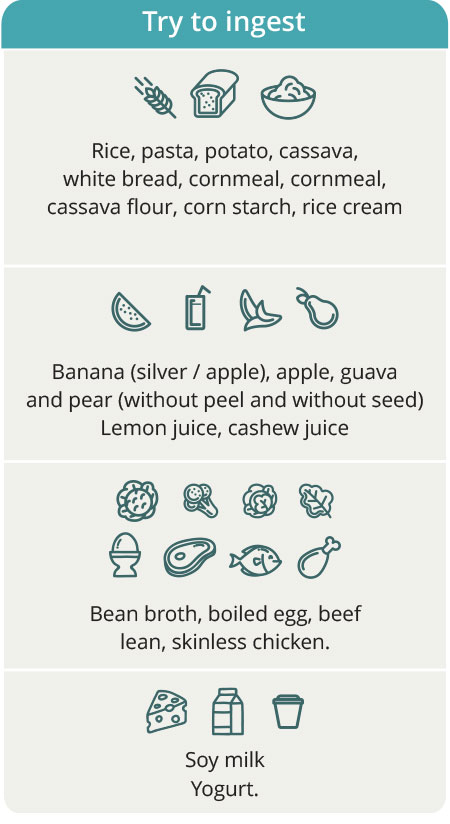
Rice, pasta, potato, cassava,
white bread, cornmeal, cornmeal,
cassava flour, corn starch, rice cream
Rice, pasta, potato, cassava,
white bread, cornmeal, cornmeal,
cassava flour, corn starch, rice cream
Banana (silver / apple), apple, guava
and pear (without peel and without seed)
Lemon juice, cashew juice
Raw fruit
Fruit in shell
Banana (silver / apple), apple, guava
and pear (without peel and without seed)
Lemon juice, cashew juice
Raw fruit
Fruit in shell
Raw vegetables, rich foods
in fiber (lettuce, cabbage, cabbage,
broccoli, cauliflower).
Raw vegetables, rich foods
in fiber (lettuce, cabbage, cabbage,
broccoli, cauliflower).
Bean broth, boiled egg, beef
lean, skinless chicken.
Beans, fatty foods,
Fried food, pea
Bean broth, boiled egg, beef
lean, skinless chicken.
Beans, fatty foods,
Fried food, pea
Yogurt.
Cow milk
Yogurt.
Cow milk
Coffee, refrigerant (cola type)
Black or matte tea.
Coffee, refrigerant (cola type)
Black or matte tea.
Very sweet foods
Very sweet foods